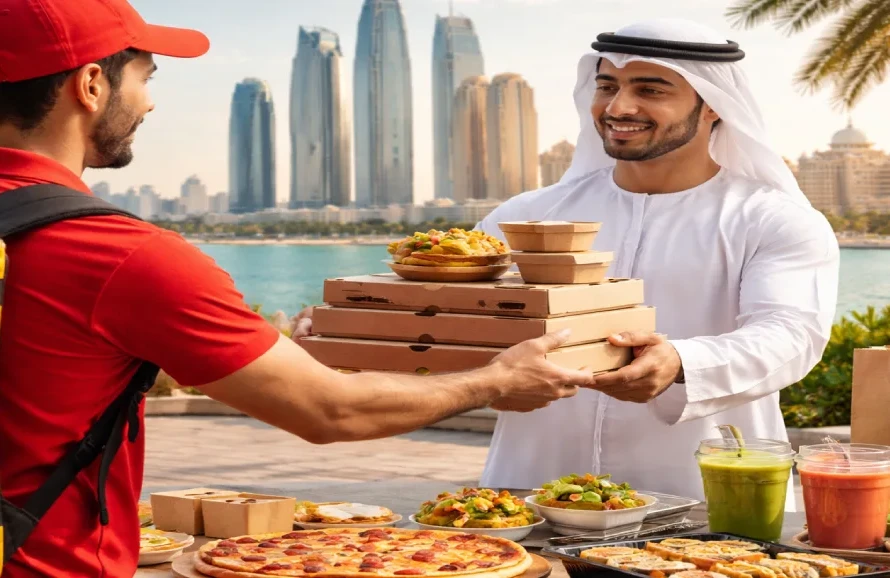
The way people order food has changed forever. Today, most customers prefer convenience, quick delivery and a wider range of food choices at their fingertips. This shift has pushed restaurants toward a revolutionary model of ghost kitchens. But what exactly are they? And why are they becoming one of the biggest trends in the food industry?
In this complete guide, you will learn what ghost kitchens are, how they work and why they are growing rapidly in Abu Dhabi, one of the Middle East’s most dynamic F&B markets.
What Are Ghost Kitchens?
A ghost kitchen is a delivery-only kitchen with no dine-in space. It prepares food exclusively for online orders through apps or in-house delivery systems. These kitchens operate behind the scenes, focusing on efficient production, quick dispatching and high-volume delivery.
Ghost kitchens are also known as:
- Cloud Kitchens
- Dark Kitchens
- Virtual Kitchens
- Delivery Kitchens
They exist to meet one goal: serve more customers through online channels at lower operational costs.
How Ghost Kitchens Work
The process is simple:
1. Customers order through delivery apps
Platforms like Deliveroo, Talabat, Noon Food and Careem receive the order.
2. The kitchen prepares the food
The kitchen team handles prep, cooking, packaging and quality control.
3. Delivery partners pick up the order
Riders collect the food and deliver it quickly to the customer.
4. Brand receives revenue minus fees
Delivery apps take a commission, but the reduced overhead still makes ghost kitchens a profitable venture.
Why Ghost Kitchens Are Growing Fast
The rise of delivery-first dining has pushed ghost kitchens forward. Here’s why they are booming worldwide, especially in Abu Dhabi:
Lower Costs and Higher Efficiency
Traditional restaurants spend heavily on:
- Rent
- Staff
- Interiors
- Front-of-house service
Ghost kitchens avoid these costs, making them 60% cheaper to operate.
High Growth in Online Food Delivery
According to Statista, the global online food delivery market continues to grow yearly. Customers prefer ordering online due to convenience, speed and variety.
Better Scalability
A single ghost kitchen can host:
- Multiple brands
- Seasonal concepts
- Experimental menus
This makes it a perfect model for entrepreneurs and established F&B brands.
Ghost Kitchens & Cloud Kitchens
Many people confuse the terms, but here’s the difference:
Ghost Kitchen
- Focuses on delivery-only
- Often hosts one or multiple brands
- No dine-in space
- Operates behind the scenes
Cloud Kitchen
- A broader term
- Includes delivery brands, catering production and multi-brand operations
- Often supported by a full kitchen provider offering infrastructure and services
In Abu Dhabi, both terms are commonly used interchangeably.
Types of Ghost Kitchens in Abu Dhabi
Ghost kitchens follow different models based on business goals.
Single-Brand Ghost Kitchen
Only one brand operates from the kitchen space.
Multi-Brand Ghost Kitchen
A single space hosts multiple virtual brands (ex: burgers + wraps + desserts).
Third-Party Provider Kitchens
Brands rent space inside a professionally equipped facility.
Example: Turnkey Kitchen Solution in Abu Dhabi.
Dark Kitchen Operations for Large Chains
Big restaurant chains run dark kitchens to expand delivery without opening new outlets.
Why Abu Dhabi Is a Hotspot for Ghost Kitchens
The capital is one of the fastest-growing markets for virtual food concepts. Here’s why:
Strong Delivery Culture
Residents frequently use delivery apps. Working professionals, expats and families rely heavily on online orders.
Government Support and Ease of Licensing
The UAE encourages food-tech innovations and supports cloud kitchen models with simpler licensing systems.
High Demand for Diverse Cuisines
The multicultural population creates demand for:
- Asian food
- Indian cuisine
- American fast food
- Healthy meals
- Premium concepts
Ghost kitchens help meet this rising demand cost-effectively.
Benefits of Ghost Kitchens for F&B Brands
Faster Launch
Brands can go live within days, not months.
Lower Investment
No need for dine-in space, interior design, or heavy staff.
Multi-Brand Opportunities
Entrepreneurs can run several brands from one kitchen.
Easy to Scale
Once a brand succeeds, it can expand to multiple locations instantly.
Technology Behind Modern Ghost Kitchens
AI-Based Order Forecasting
Predicts peak hours and best-selling items.
Smart Kitchen Management Systems
Tracks orders, inventory and delivery times.
Data Analytics
Helps improve menu performance and customer satisfaction.
How Truss Cloud Kitchen Helps Brands in Abu Dhabi
Truss Cloud Kitchen gives brands everything they need to launch and grow.
Ready-to-Use Cloud Kitchen in Abu Dhabi
- Fully equipped spaces
- HACCP-compliant kitchens
- Flexible units for different cuisine types
Cloud Kitchen Solutions for F&B Brands
Includes:
- Menu consulting
- Brand development
- Delivery integration
- Operations support
Turnkey Kitchen Solution in Abu Dhabi
Truss provides licenses, setup and infrastructure so entrepreneurs can start immediately.
Conclusion
Ghost kitchens are transforming the F&B industry. They offer low investment, fast scalability and huge potential for profitable online food delivery. In a rapidly growing market like Abu Dhabi, ghost kitchens present the perfect opportunity for entrepreneurs and established brands looking to expand.
With the right support, such as Cloud Kitchen Solutions for F&B Brands from Truss Cloud Kitchen, launching your food brand becomes easier, faster and more cost-effective.
FAQs
Q1. Are ghost kitchens profitable?
Ans: Yes. Since they reduce rent, staff and operational costs, ghost kitchens deliver higher profit margins than dine-in restaurants.
Q2. What is the difference between a ghost kitchen and a dark kitchen?
Ans: They are similar. “Dark kitchen” is another term for “ghost kitchen,” both referring to delivery-only food facilities.
Q3. Can I start multiple brands from one ghost kitchen?
Ans: Yes. Many entrepreneurs operate 3-10 virtual brands from a single kitchen to maximize income.
Q4. Why are ghost kitchens popular in Abu Dhabi?
Ans: The city has high delivery demand, a diverse population, modern infrastructure and strong support for food-tech businesses.